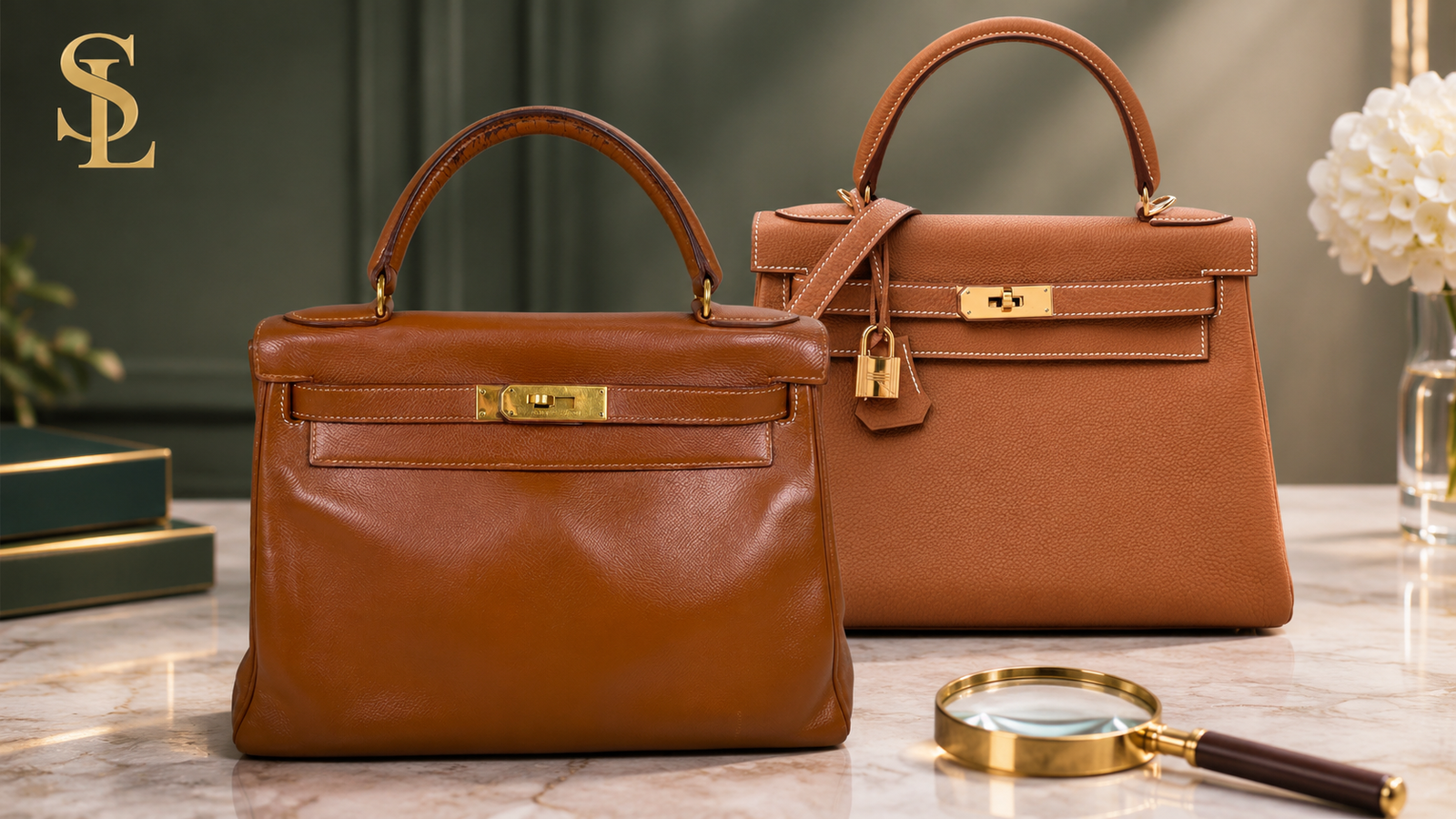
A vintage handbag looks different from a newer example of the same model. Should that concern you?
It is a reason to ask questions, not proof that the older bag is counterfeit. A newer handbag is not automatically the right authentication reference, even when the model name is the same.
I regard authentication as an interpretation of evidence as a whole. The useful question is not simply where two bags differ, but whether the findings make sense for the bag being assessed.
What details are worth looking at?
Logos, stamps and typography. Letter shapes, spacing, placement and the appearance of a stamp provide observable points of comparison. A difference should be recorded accurately rather than treated as a verdict based on how a newer example looks.
Hardware and stitching. Hardware shape, finish and attachment, together with stitch placement and the way seams are formed, are areas for examination. Their significance depends on how they relate to the bag’s materials and construction, not simply whether they match another photograph.
Materials and construction. The material, the way panels are assembled and how components connect help place individual details in context. A close-up of one feature cannot show all those relationships.
Interior details. The lining, pockets, internal markings and joins also belong in the assessment. A comparison limited to the exterior leaves part of the bag unexamined.
These are examination categories, not rules about what a brand used in a particular year. They help identify what needs understanding; they are not a checklist for deciding authenticity.
The production period needs evidence
A useful reference must be reliable and relevant to the brand, model, material, construction and production period. An online image labelled “vintage” does not, by that label alone, establish the bag’s date or authenticity.
“They made them differently then” needs evidence for the feature in question. If the bag’s claimed date is uncertain, it cannot serve as a settled fact to explain an inconsistency. Age alone is not an answer, and physical examination cannot supply a missing historical production fact.
Later alterations can complicate the comparison
Repairs, restoration or replacement components may mean that a detail no longer reflects the bag as originally made. Relevant repair records or earlier photographs can help clarify this. A possible alteration should be investigated, not assumed to explain the difference or mistaken for a production-period feature.
What this means when you are buying
Use a newer handbag to help you frame questions, rather than as a pass-or-fail standard for a vintage purchase. Ask what supports the seller’s description of the model and period, and whether any later work is documented.
Look for clear views of the whole bag, including its interior, alongside close-ups of the details that concern you. If the available images leave a material question unanswered, seek a professional assessment that can determine whether physical examination is needed.
A useful explanation should address the particular difference, the basis for the comparison and any uncertainty that remains. Several reassuring similarities do not cancel out a significant unresolved finding. Where essential evidence is missing, the professional conclusion may need to remain open.
The decision should rest on what the available evidence supports about this bag, not on how closely it resembles the newest version.