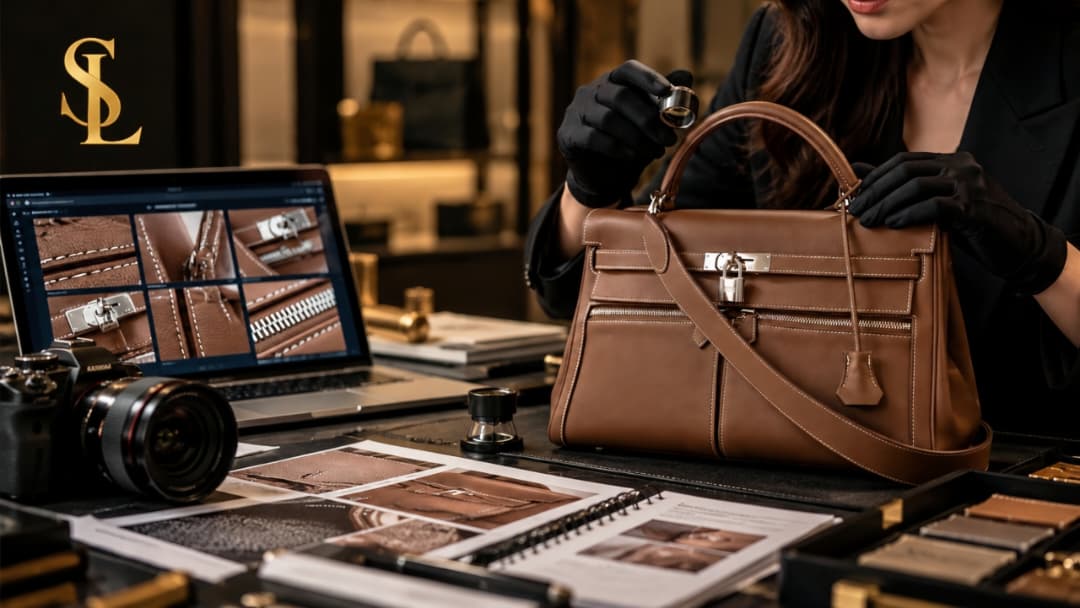
A confident authentication conclusion is not necessarily a reliable assessment. The wording may be decisive while leaving the essential work unexplained: what was examined, whether the evidence was sufficient, and why it supported that answer.
I regard authentication as an interpretation of evidence as a whole. Reliability therefore depends on how the assessment is built, from the initial scope to the responsibility taken for the conclusion. It cannot rest on one persuasive detail, one method or the reputation of a document.
The scope sets the boundaries of the answer
Before weighing a conclusion, a reader should be able to establish what the assessment covered. Was the physical item examined, or was the assessment based on submitted photographs? Which parts or components were included? Were relevant areas inaccessible or inadequately recorded?
These distinctions shape what can reasonably be concluded. An assessment of selected views should not be presented as though every relevant part of the object had been examined. Where something falls outside the scope, that boundary should remain clear in the final explanation.
A defined scope also gives the examination a direction. The method should be chosen for the questions that need answering, rather than the item being fitted into a fixed process regardless of what the evidence reveals.
Evidence needs to answer the question
More photographs do not automatically mean stronger evidence. Repeated views of a clearly visible area may add little if an important construction detail remains out of sight. Useful evidence is relevant, sufficiently clear and broad enough to address the material questions within the assessment.
Physical examination can provide information unavailable from photographs, including a clearer understanding of how components relate or move. It has limits too. Access to the object cannot restore a feature lost through alteration or supply missing historical reference information. The role of direct examination is explored further in Why Physical Examination Still Matters in Luxury Authentication.
The reference material needs the same scrutiny as the evidence from the item. Its source and basis for being treated as reliable should be understood. It must also be relevant to the brand, model, material, construction and production period under consideration. A comparison can be visually convincing and still be inappropriate to the item being assessed.
This is where methodology becomes practical: selecting evidence, choosing applicable references and deciding how to investigate findings that need explanation. A larger collection of images or references is useful only if it improves that work.
Observation and judgement are different tasks
Recording a difference is an observation. Explaining whether it matters to authenticity is a professional judgement.
The reasoning needs to connect those two tasks. It should explain why a finding carries weight in the item's production context, how it relates to the other evidence and whether a competing explanation remains plausible. A difference alone does not establish counterfeiting, just as a correct serial number does not establish authenticity.
Consistency matters, but authentication is not a tally of matching features. A significant unresolved finding should not disappear beneath a larger number of reassuring observations.
AI and digital tools may assist with comparison, organisation and the identification of patterns. Their output still requires interpretation by a person with relevant expertise who takes responsibility for the assessment. The choice of tool does not remove the need to judge whether the evidence and references are fit for the question.
Where evidence remains insufficient, an inconclusive assessment may be the appropriate result. Reliability includes recognising when the available material does not support a firm answer and explaining the specific limitation. A more emphatic conclusion would not make that assessment stronger.
The reasoning should remain traceable
A professional report is valuable because of the examination and reasoning it records, not simply its appearance. Its supporting records should make it possible to follow the assessment back to the item, the material examined and the observations on which the conclusion depends.
That means preserving the connection between photographs, examination notes, relevant references and the reasoning applied. The assessment date, scope and limitations give those records their context. If new evidence changes an authentication conclusion, the original assessment record must remain preserved. Any subsequent review or revision must be documented separately, explaining the new evidence, what changed and why.
A concise report can be supported by detailed examination records. Length is not the test. What matters is whether the basis of the conclusion can be revisited and understood during an appropriate review, while protecting confidential information and proprietary reference material.
Someone must remain accountable
Relevant competence matters at the point of judgement. Familiarity with luxury goods generally should not be treated as sufficient expertise for every category, model or production period. The person responsible needs to recognise the limits of their knowledge as well as the limits of the evidence.
Review should be proportionate to the questions the assessment raises. Where specialist knowledge or a further professional review is needed, it should address the evidence and reasoning, not merely repeat the final answer. A second opinion is useful when it tests the basis of the first.
Accountability also means that responsibility for the conclusion is clear. A recipient should know who stands behind the assessment and how to seek clarification or raise a concern. New evidence or an identified error should be considered on its merits, with any resulting correction explained.
A reliable assessment leaves a reader able to understand what was examined, why the evidence supports the conclusion and where the limits remain. Confidence in that conclusion should come from this work, not take its place.