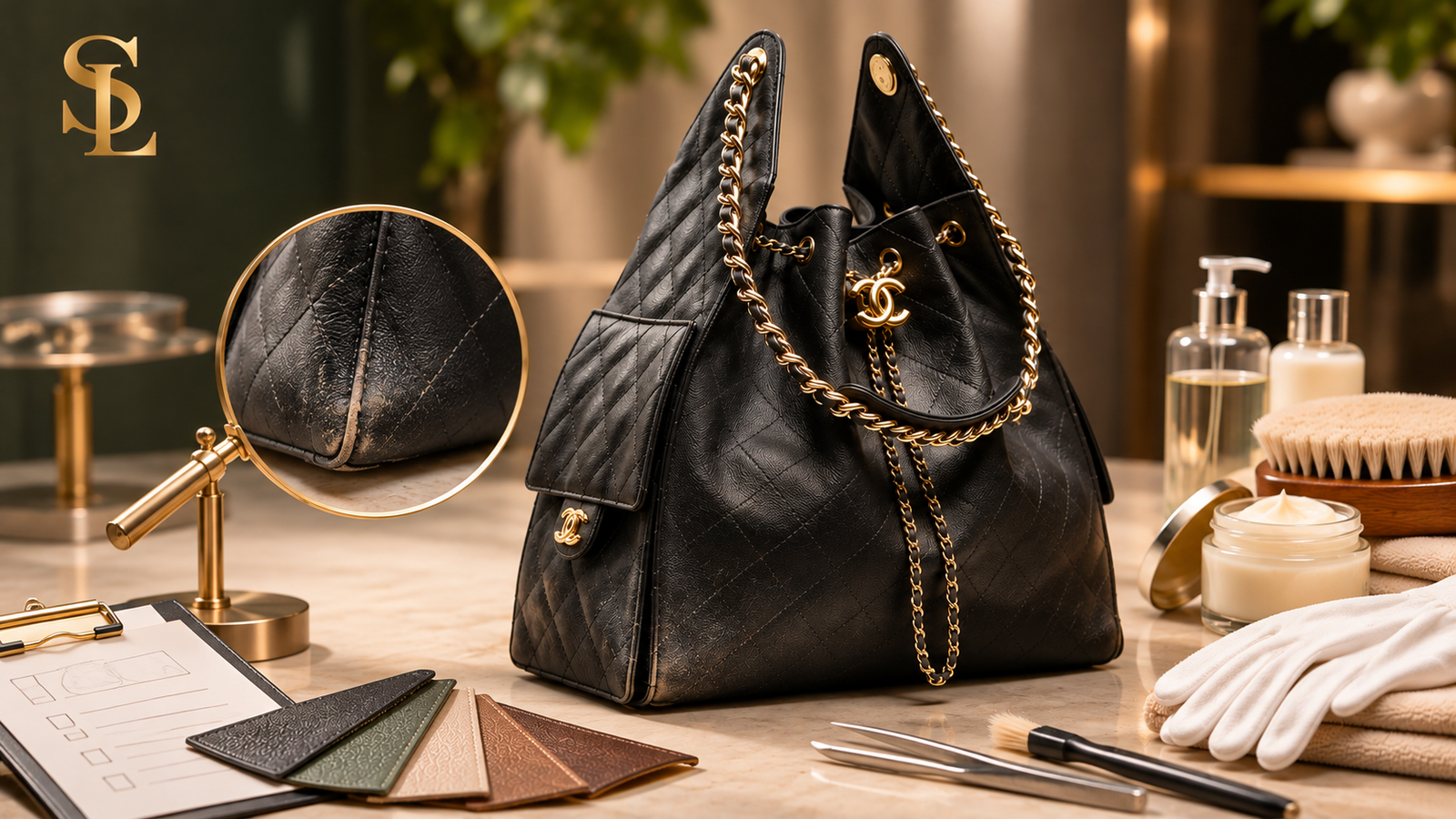
A handbag can look newer after restoration without becoming more valuable. A necessary repair may also make a handbag usable again while preserving many of the qualities that made it worth keeping.
The question is not simply whether work has been done. It is what changed, what was preserved and how those changes matter to this particular bag.
I treat authentication and valuation as different professional questions. When a handbag has been cleaned, repaired or restored, originality and present condition also need their own answers.
Cleaning, repair and restoration are different decisions
Routine cleaning aims to remove dirt or surface soiling. Repair addresses a particular problem, such as loose stitching or a damaged attachment. Restoration generally involves work intended to recover an earlier appearance or usable condition, potentially including recolouring, refinishing or replacement.
These descriptions can overlap. A service called “cleaning” may include additional surface treatment, while “restoration” may mean anything from local work to extensive alteration. The proposed work matters more than the label.
Removing dirt is a different decision from covering worn colour. Repairing existing stitching is different from replacing an entire handle. Owners should know which intervention they are agreeing to before judging its likely benefit.
Four questions that should stay separate
Authenticity concerns whether the handbag is genuine. Originality concerns how much of its original material, finish and components remains. Condition describes its present physical state, including wear, damage and the result of any work. Market value concerns what the relevant evidence supports for that item in a defined valuation context.
A genuine handbag can have replacement hardware. An unrestored bag can retain its original materials while being in poor condition. A repair can improve function while changing originality.
Restoration does not automatically make a handbag counterfeit. Equally, confirming authenticity does not establish that every part or finish is original, or that the work has increased its value.
What has actually changed?
Recolouring does not change the authenticity of a genuine handbag, but it can affect its market value. It may change the original surface finish and therefore its originality. Condition concerns the handbag's present physical state, including the result of that work. A colour match alone does not establish that the original finish has been preserved, and a fresher appearance does not establish a higher value.
Leather restoration can change the leather's original appearance, texture or feel. That is different from routine cleaning, which should not be assumed to cause those changes. An owner should understand whether the proposed work is intended to clean the existing surface, condition it or apply a new finish.
Stitching repairs can affect originality because certain original manufacturer thread materials are not commercially available. A replacement thread may look similar without being identical to the manufacturer's original thread; this does not mean every repair uses a different thread. The repair location and how much original stitching remains also matter. With replacement hardware, the source, specification and fit of the component matter, alongside the record of its installation.
These details also affect how authentication evidence is interpreted. A difference may relate to later work rather than original manufacture. The assessment must consider the handbag as a whole, including its model, material, construction and production period, with appropriate historical references.
Recolouring does not in itself prevent authenticity assessment. If a relevant feature has been covered, removed or changed, any limitation must be assessed from the evidence actually available, not assumed from recolouring alone. As discussed in Why Physical Examination Still Matters in Luxury Authentication, direct examination can help investigate a question, but it cannot guarantee a conclusion where important evidence no longer remains.
Who did the work matters, but it is not the whole answer
Brand-authorised servicing and third-party restoration should be described accurately. An owner's statement that a bag was “sent to the brand” needs supporting records, just as a third-party service description needs a clear account of the work.
Authorisation identifies the service relationship. It does not, by itself, tell you how much was replaced, whether the original finish remains or how buyers will regard the result. Third-party work should likewise be assessed for its actual scope and quality, rather than treated as automatically beneficial or damaging.
Even a well-executed replacement changes what remains original. Conversely, retaining every original component does not necessarily leave a bag in satisfactory usable condition. The distinction is between the quality of the work and the consequences of choosing that work.
A service record should explain more than the bill
A useful record identifies the handbag, the date, the provider, the areas treated and any materials or components replaced. Before-and-after photographs can help show the extent of the intervention. An invoice saying only “restoration” leaves much of that history unexplained.
Documentation helps an assessor distinguish known work from uncertainty. It also helps an owner describe the handbag accurately when selling. It cannot restore removed material or establish the quality of the work on its own.
The repair-history questions in What Should You Check Before Buying a Pre-Owned Luxury Handbag? are easier to answer when those records stay with the item.
Before agreeing to an irreversible change
Ask what will be retained, removed, covered or replaced, and whether the proposed change can be reversed. Do not assume that a later treatment can recover the original finish or undo a colour change.
If authenticity or existing condition needs to be established, address that before work alters the relevant evidence. Record the starting condition and agree that additional work requires further consent.
The owner's purpose matters too. Making a bag comfortable to use again may be a worthwhile objective even if it does not produce a higher resale value. If resale is the reason for restoration, seek an assessment of the proposed intervention before committing to it, rather than relying on a promise that “looking new” will make the bag worth more.
Value follows the item and the evidence
The comparison should reflect the handbag's actual starting condition. Repairing a damaged bag is not the same proposition as refinishing a well-preserved one. Nor should an extensively recoloured example be treated as equivalent to an otherwise comparable bag with its original finish intact.
Relevant market evidence needs to account for the intervention: its extent, quality, documentation and the importance buyers place on originality or usability in that market. The effect may be positive, negative or limited. Neither the service cost nor an attractive after-photograph establishes the change in value.
Before authorising work, be clear about the improvement you want and the original characteristics you are willing to change. A good decision begins there, not with an assumption that every intervention adds value or that every restored handbag loses it.